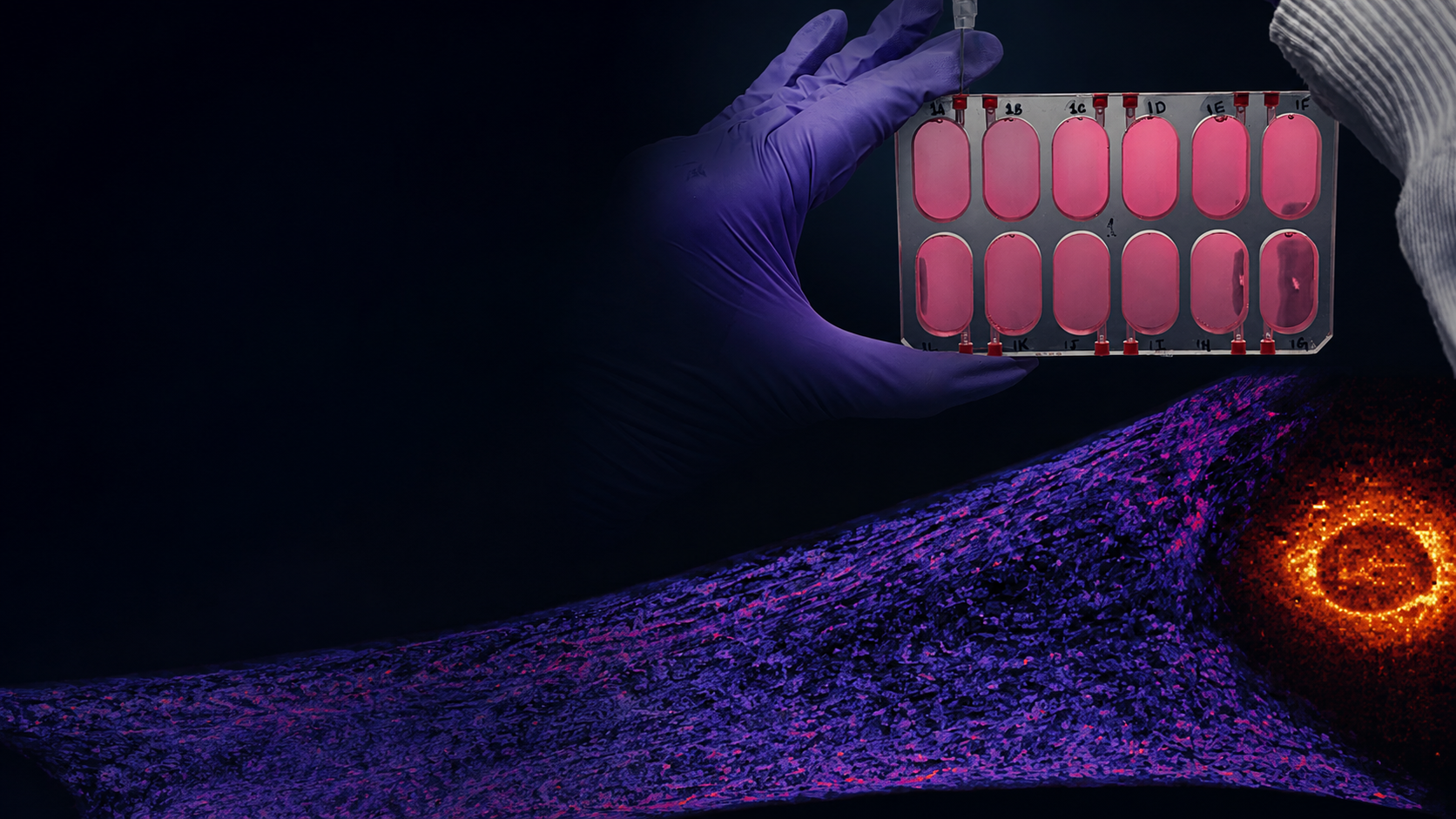
Ramanathan Lab · inStem, Bangalore
Healthy aging depends on how well muscle maintains and rebuilds itself.
We use environmental extremes — from microgravity to cold — to reveal how metabolism governs tissue loss and resilience. One stress degrades the tissue and one protects it. Both act through the mitochondrion, which is why the comparison is worth making.
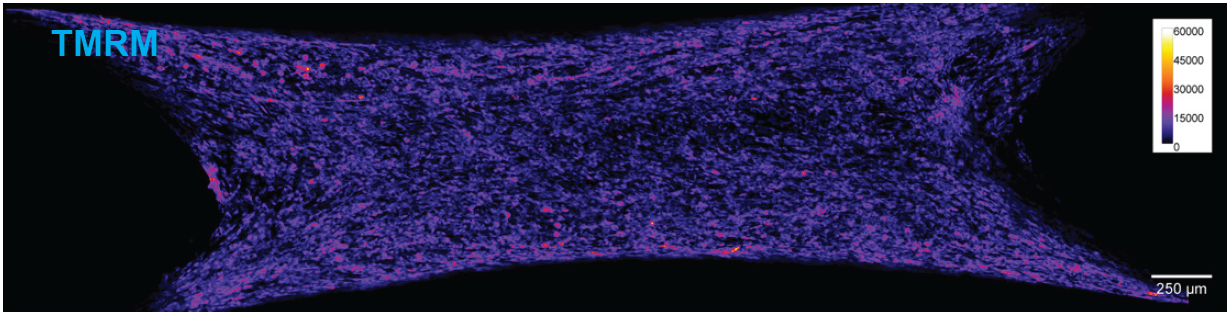
Bioengineered human muscle
Bioengineered human muscle lets us measure what cells are doing metabolically and then ask what the whole tissue can do. We are extending the platform to motor neuron–muscle co-cultures, contractile force measurements and multiplexed models of sarcopenia.
Metabolism shapes repair
How metabolic state and the lipid signals sent by senescent cells influence whether muscle stem cells rebuild tissue or lose function with age. The work runs from fundamental mechanism through to current sarcopenia therapeutics.
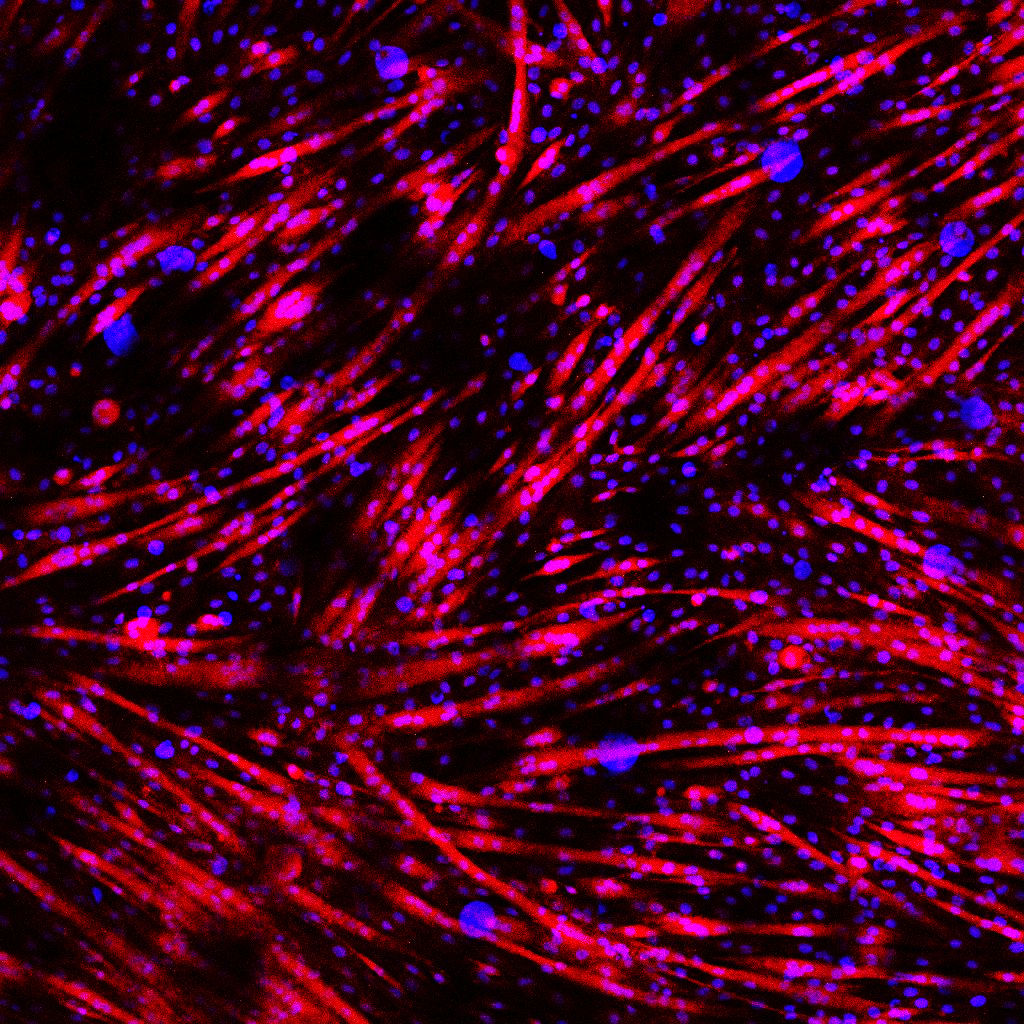
Project Myogenesis aboard Axiom Mission 4
Our human muscle stem-cell experiment was flown to the International Space Station as part of Axiom Mission 4. Cultures were maintained in orbit with matched ground controls at inStem; molecular and metabolic analyses are underway. The mission asks what rapid muscle loss in orbit can tell us about repair, disuse and aging on Earth.
Cold makes cells more capable
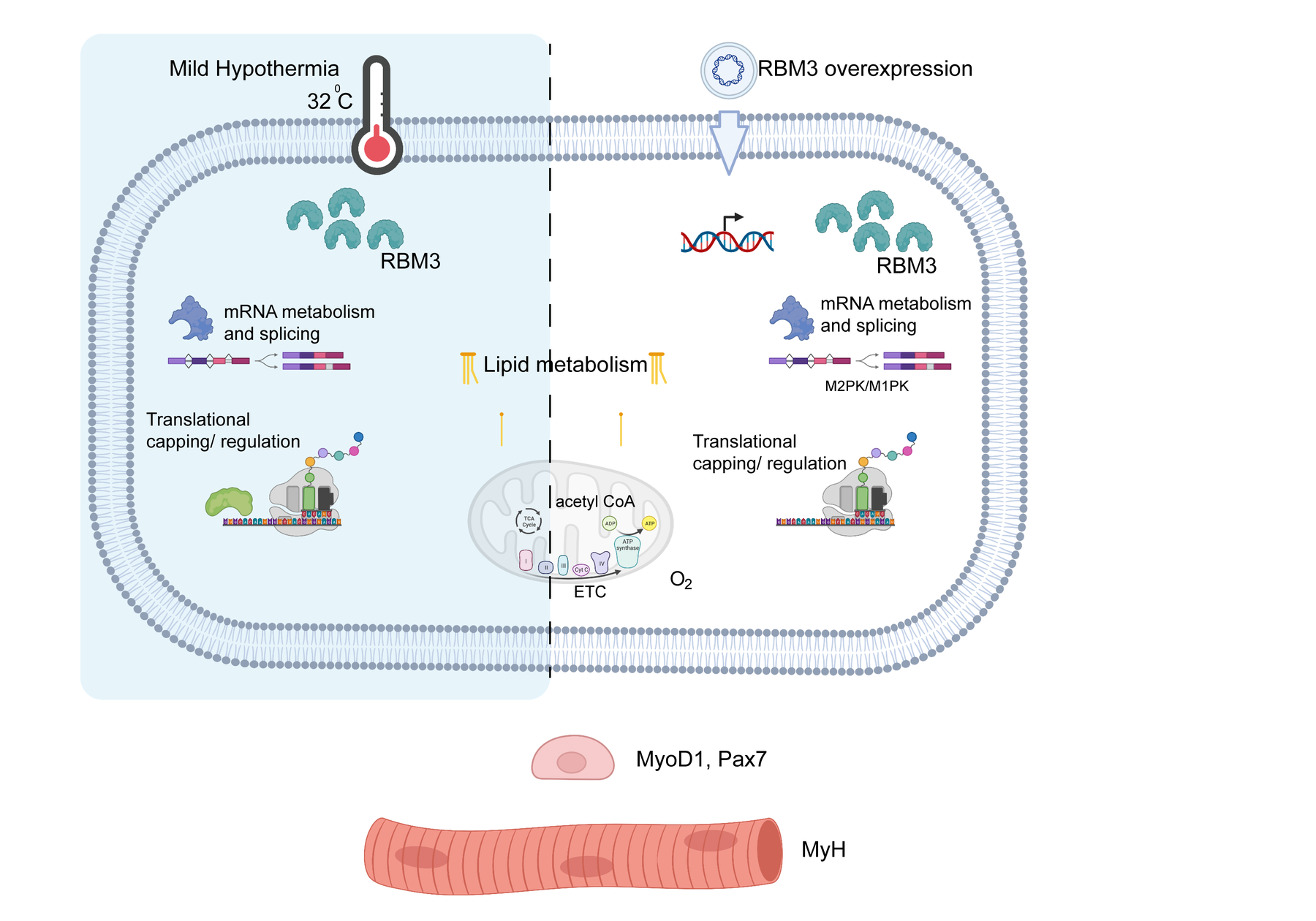
Mild cooling is not simply an injury. It switches on a conserved programme — RBM3 among its mediators — that reorganises mitochondrial metabolism and RNA regulation and leaves cells better able to withstand stress. We are working out how that programme runs, and whether it can be engaged without the cold.
From mechanism to intervention
Understanding why muscle fails is only half of the problem
The mechanisms we identify — metabolic, lipid-signalling, cold-responsive — are also starting points for intervention. We test candidates in the same bioengineered human tissue we use to study the biology, measuring strength, fatigue resistance and metabolic state, and we read those results against cohort measurements that show which changes matter in people.
Several of these interventions are the subject of intellectual-property protection and are described here only in general terms.
Sarcopenia and precision medicine → Lipid signalling as a therapeutic target →