Platforms
The experimental systems and measurements we share across every research area.
Our platforms let us follow a mechanism from the behaviour of single cells up to what a whole tissue can do. The same question can then be put to human tissue models, to cells under controlled environmental stress, and to quantitative functional and molecular measurement.
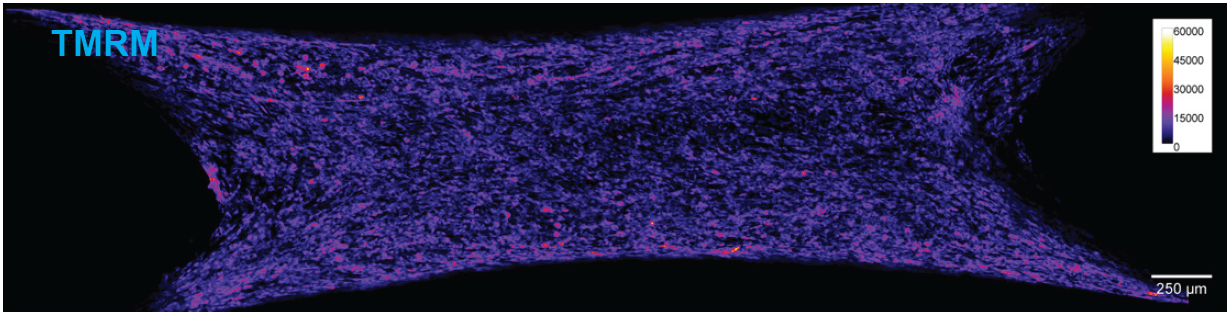
Bioengineered human muscle
Bioengineered human muscle provides a controlled tissue-scale system for investigating development, injury, repair and treatment response. The platform is being extended to motor neuron–muscle co-cultures and multiplexed models of sarcopenia.
We measure contractile force alongside quantitative imaging and molecular profiling, so that tissue architecture and metabolic state can be read against performance.
Gravisim
Gravisim is our ground-based microgravity simulation platform. It enables questions arising from spaceflight to be investigated through controlled, repeatable experiments with cells and bioengineered tissues. A patent has been filed for the Gravisim microgravity system.
Metabolomics and lipidomics
Discovery and targeted measurements across cells, tissues and biofluids show how metabolic state tracks with cell fate, environmental stress and treatment response.
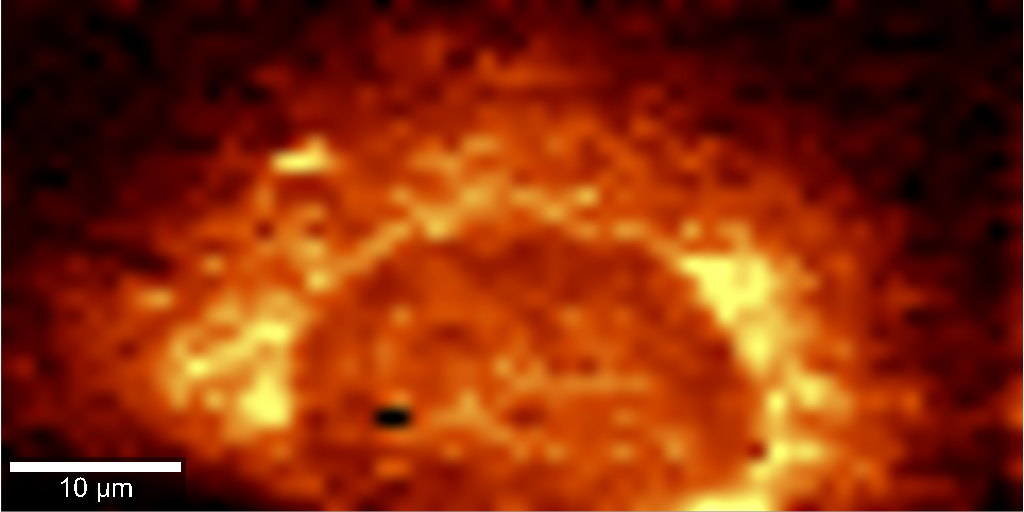
Raman imaging and image analysis
Label-free Raman maps and quantitative microscopy reveal spatial changes that bulk measurements can miss.
Raman map from Pundlik SS, Venkateshvaran A, Suresh Y, Mamgain H, Ramanathan A. ACS Omega 2026;11(9):14426.